Trauma That Echoes, Trauma That Shapes
Understanding PTSD and CPTSD
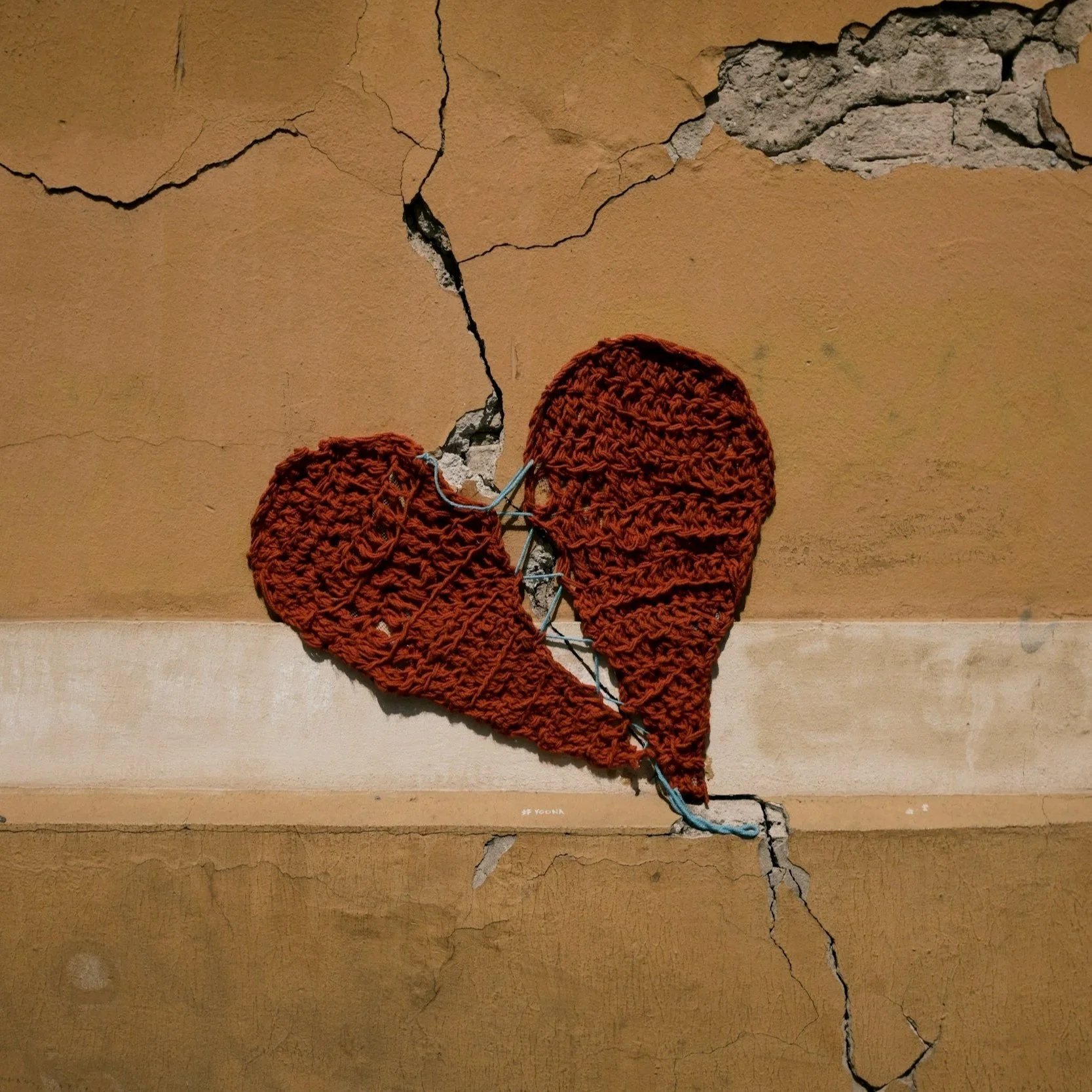
When most people hear the word trauma, they picture the big, dramatic moments — soldiers returning from war, first responders after a crisis, survivors of terrible accidents. And yes, those experiences absolutely can be traumatic. They can shake a person’s sense of safety in ways that are deep and life‑changing.
But trauma doesn’t only come from the extraordinary. Sometimes it comes from the everyday.
It can come from growing up in a home where you never knew which version of a parent you’d get. From years of criticism that slowly chipped away at your sense of worth. From relationships where love and fear were tangled together. From environments where you had to stay small, quiet, or constantly alert just to get through the day.
Trauma is not rare. Trauma is human. Most people will experience something overwhelming at some point in their lives — something that leaves a mark, even if it doesn’t become a disorder.
And that’s the key: Trauma is the event. PTSD – Post Traumatic Stress Disorder- and CPTSD -Complex Post Traumatic Stress Disorder- are the long-term patterns that sometimes develop afterward — but not always.
To see the difference, let’s start with someone who did experience trauma, but whose nervous system eventually found its way back to steady ground.
Vignettes
Jordan — Trauma Without PTSD
Jordan was in a frightening car accident. For a while afterward, they startled easily. Loud noises them jump. They avoided the intersection where it happened. Their sleep was restless.
But slowly — with support, rest, and time — their body recalibrated. The memories were still unpleasant, but they no longer hijacked Jordan’s day. Their nervous system learned that the danger had passed.
Jordan experienced trauma. Jordan did not develop PTSD.
This is incredibly common. The nervous system is built to heal, especially when people have safety and support.
But sometimes the imprint goes deeper, the body doesn’t return to baseline, and the past keeps showing up in the present — not for a few weeks, but for months or years.
That’s where PTSD and CPTSD come in.
Alex — A PTSD Story
A car door slams in the parking lot. Alex’s heart leaps into their throat. Their chest tightens. Their vision narrows for a moment.
A part of them knows: It’s just a car door. But their body doesn’t buy it.
This isn’t the temporary startle Jordan felt. This is the kind of reaction that’s been happening for months — the kind that interrupts sleep, hijacks concentration, and makes everyday life feel like walking through a minefield of reminders. The danger is long gone, but Alex’s nervous system keeps sounding the alarm as if the moment never ended.
That’s the difference: PTSD isn’t about the trauma itself — it’s about the body getting stuck in the aftershocks.
Sam — A CPTSD Story
A sharp tone from Sam’s partner cuts through the room. Their shoulders tense. Their breath shortens. Something inside them pulls inward. The room feels just a touch farther away —just enough that their own body feels muted, like someone turned the dimmer switch down.
And then the thoughts arrive, automatic and familiar: It’s your fault. You’re wrong. Fix it fast.
Nothing dangerous is happening in the present moment. But Sam’s body is reacting to years of relational harm — the kind of slow, repeated erosion that teaches a person to shrink, to disappear, to brace for impact long before anything happens.
This is Complex PTSD: not a single wound, but a nervous system shaped by an environment where safety was unpredictable. Where pulling away — from sensations, from emotions, from oneself — became a quiet, protective habit.
Where PTSD is often about a moment, CPTSD is about a pattern. Where PTSD disrupts a life, CPTSD shapes it.
So What Exactly Is PTSD?
PTSD, Post Traumatic Stress Disorder, usually develops after something overwhelming happens — a car accident, an assault, a natural disaster, a medical emergency. Something that shocks the system and overwhelms a person’s ability to cope.
People with PTSD often experience:
Unwanted memories or flashbacks
Avoiding reminders of what happened
Feeling on edge or jumpy
Trouble sleeping or concentrating
A sense that the danger is still happening, even when it’s not
In PTSD, the nervous system gets stuck in “danger mode” because of a specific event. The body keeps reacting as if the threat is still present.
But even with all of that, a person’s sense of who they are — their identity — usually stays intact.
And What Is CPTSD?
CPTSD, Complex Post Traumatic Stress Disorder, develops when the trauma isn’t a single moment, but a long-term environment. It often comes from:
Childhood abuse or neglect
Domestic violence
Long-term emotional abuse
Situations where escape wasn’t possible
Environmental instability or community violence
When the nervous system grows up in survival mode, it doesn’t just react to danger — it organizes itself around it.
People with CPTSD often struggle with:
Big, overwhelming emotions
Deep shame or a sense of being “too much” or “not enough”
Difficulty trusting others
Fear of closeness or fear of abandonment
Feeling disconnected from their bodies (dissociation)
Feeling like they don’t know who they are
CPTSD includes everything PTSD has — plus the long-term effects on identity, relationships, and self-worth.
A Simple Side-by-Side Comparison
Here’s an easy way to picture the difference:
PTSD is like a storm that hits. CPTSD is like a hostile climate in which you live.
PTSD comes from something that happened to you. CPTSD comes from something you had to live inside of.
Both are real. Both are valid. Both deserve care.
Why This Distinction Matters
Many people with CPTSD spend years wondering:
“Why can’t I just get over it.”
“Why do I react so strongly.”
“Why do relationships feel so hard for me.”
Understanding CPTSD helps people realize:
Their reactions make sense
Their symptoms aren’t personality flaws
Their healing may take a different path
They’re not alone, and they’re not “too much”
Naming the pattern is often the first step toward relief.
How Healing Works
Healing from PTSD and CPTSD isn’t about “forgetting” or “moving on.” It’s about helping the nervous system learn new patterns.
Most trauma therapies follow three broad phases:
1. Stabilization
Learning how to calm the body, understand triggers, and build a sense of safety. This might include grounding skills, breathing techniques, or learning how the nervous system works.
2. Processing
Gently working through the memories or patterns that keep the body stuck in survival mode. This can happen through EMDR, parts work (IFS), somatic therapy, or other trauma-focused approaches.
3. Integration
Rebuilding a sense of self. Learning how to have healthy relationships. Creating new internal stories about who you are and what you deserve.
Healing is not quick, but it is absolutely possible.
A Final Thought
Whether someone is living with PTSD or CPTSD, their symptoms are not signs of weakness. They are signs of a nervous system that adapted to survive.
And survival is never something to be ashamed of.
Healing is possible. It’s not linear, and it’s not identical for everyone — but with the right support, people can move from survival mode into a life that feels grounded, connected, and genuinely their own.
Recommended Books
If you want to explore these ideas more deeply, here are a few books that many people find grounding and clarifying:
What My Bones Know — Stephanie Foo
A deeply relatable memoir about growing up with complex trauma and learning to heal as an adult. It’s honest, accessible, and a clear window into CPTSD.
When Religion Hurts You — Laura Anderson, PhD
A compassionate guide for anyone navigating religious trauma or spiritual abuse. It offers language, validation, and gentle frameworks for understanding long‑term relational harm.
The Body Keeps the Score — Bessel van der Kolk, MD
A foundational book on how trauma lives in the body and why healing often requires more than talk therapy. Dense at times, but incredibly illuminating.
Trauma and Recovery — Judith Herman, MD
A classic text that first articulated the concept of complex trauma. Still one of the most important works for understanding how long‑term harm shapes identity and relationships.
Citations
American Psychiatric Association. (2013). Diagnostic and statistical manual of mental disorders (5th ed.).
Brewin, C. R., Cloitre, M., Hyland, P., Shevlin, M., Maercker, A., Bryant, R. A., Humayun, A., Jones, L. M., Kagee, A., Rousseau, C., Somasundaram, D., & van Ommeren, M. (2017). A review of current evidence regarding the ICD‑11 proposals for diagnosing PTSD and complex PTSD. Clinical Psychology Review, 58, 1–15.
Cloitre, M., Courtois, C. A., Ford, J. D., Green, B. L., Alexander, P., Briere, J., Herman, J. L., Lanius, R., Stolbach, B. C., Spinazzola, J., & van der Kolk, B. A. (2012). The ISTSS expert consensus treatment guidelines for complex PTSD in adults. International Society for Traumatic Stress Studies.
Cloitre, M., Garvert, D. W., Brewin, C. R., Bryant, R. A., & Maercker, A. (2013). Evidence for proposed ICD‑11 PTSD and complex PTSD: A latent profile analysis. European Journal of Psychotraumatology, 4(1), 20706.
Ford, J. D. (2020). Complex PTSD: Research directions for nosology, clinical science, and practice. Current Directions in Psychological Science, 29(1), 1–6.
Herman, J. L. (1992). Trauma and recovery. Basic Books.
Karatzias, T., & Cloitre, M. (2019). Complex PTSD—What is the evidence for a new diagnosis? Current Psychiatry Reports, 21(8), 48.
McCrory, E., De Brito, S. A., & Viding, E. (2010). Research review: The neurobiology of maltreatment and adolescent psychopathology. Journal of Child Psychology and Psychiatry, 51(10), 1079–1095.
Teicher, M. H., & Samson, J. A. (2016). Annual research review: Enduring neurobiological effects of childhood abuse and neglect. Journal of Child Psychology and Psychiatry, 57(3), 241–266.
Van der Kolk, B. A. (2014). The body keeps the score: Brain, mind, and body in the healing of trauma. Viking.
World Health Organization. (2019). International classification of diseases for mortality and morbidity statistics (11th rev.).
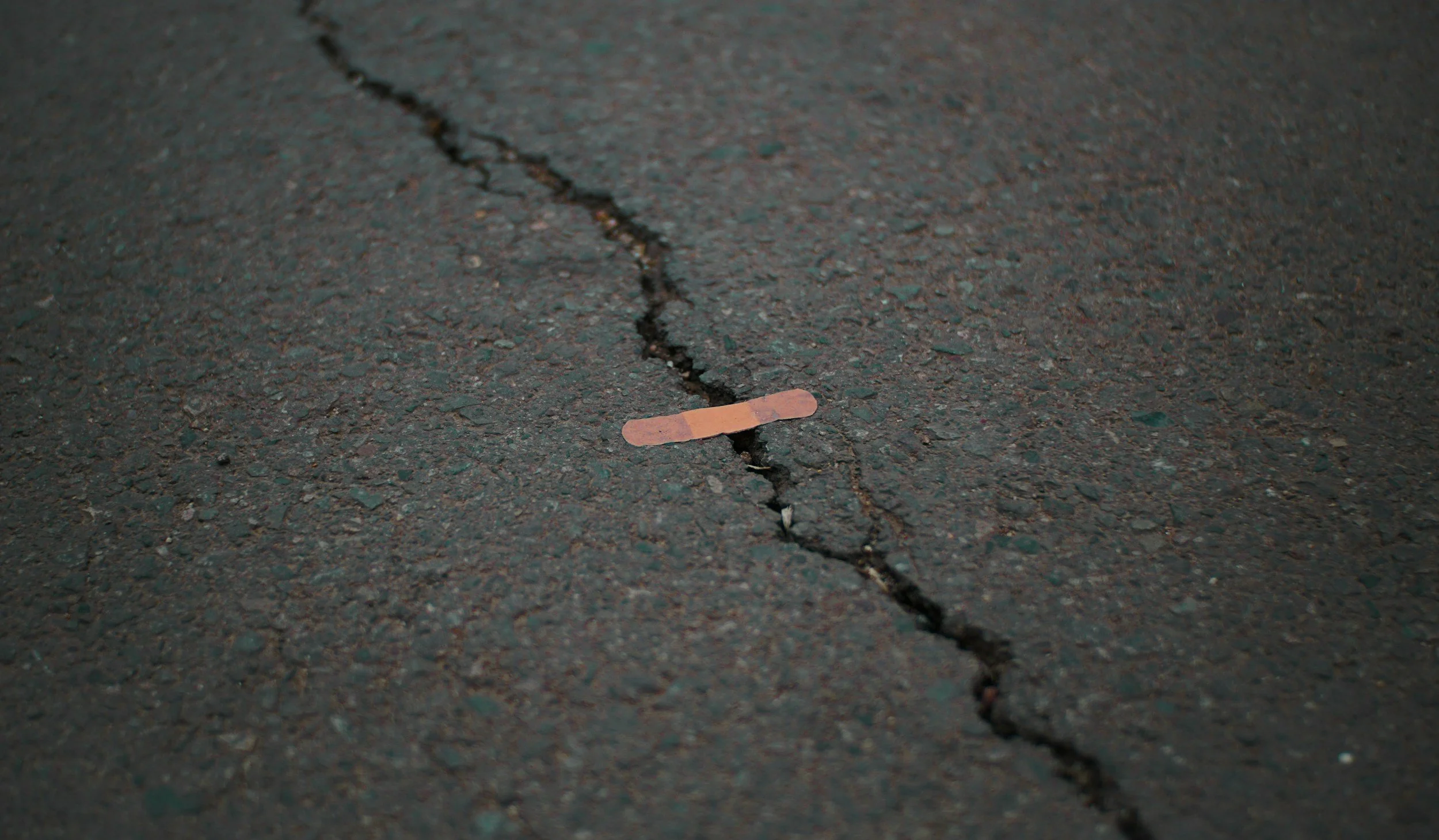
Historias de Trauma: Cuando el Pasado Resuena y Cuando Moldea al Ser
Entendiendo el PTSD y el CPTSD
Cuando la mayoría de las personas escucha la palabra trauma, imaginan momentos grandes y dramáticos: soldados regresando de la guerra, personal de emergencia después de una crisis, sobrevivientes de accidentes terribles. Y sí, esas experiencias pueden ser profundamente traumáticas. Pueden sacudir el sentido de seguridad de una persona de maneras intensas y duraderas.
Pero el trauma no siempre viene de lo extraordinario. A veces viene de lo cotidiano.
Puede venir de crecer en un hogar donde nunca sabías qué versión de un padre te iba a tocar. De años de críticas que poco a poco desgastaron tu sentido de valor. De relaciones donde el amor y el miedo estaban entrelazados. De entornos donde tenías que mantenerte pequeño, callado o siempre alerta solo para pasar el día.
El trauma no es raro. El trauma es humano. La mayoría de las personas vivirá algo abrumador en algún momento de su vida — algo que deja una marca, incluso si no se convierte en un trastorno.
Y ahí está la clave: El trauma es el evento. El PTSD (Trastorno de Estrés Postraumático) y el CPTSD (Trastorno de Estrés Postraumático Complejo) son los patrones a largo plazo que a veces se desarrollan después — pero no siempre.
Para ver la diferencia, empecemos con alguien que sí vivió un evento traumático, pero cuyo sistema nervioso logró volver a un estado de equilibrio.
Jordan — Trauma sin PTSD
Jordan tuvo un accidente automovilístico aterrador. Durante un tiempo, se sobresaltaba con facilidad. Los ruidos fuertes le hacían brincar. Evitaba la intersección donde ocurrió. Dormía inquieto.
Pero con apoyo, descanso y tiempo, su cuerpo se fue recalibrando. Los recuerdos seguían siendo desagradables, pero ya no tomaban control de su día. Su sistema nervioso aprendió que el peligro había pasado.
Jordan vivió un trauma. Jordan no desarrolló PTSD.
Esto es muy común. El sistema nervioso está diseñado para sanar, especialmente cuando hay seguridad y apoyo.
Pero a veces la huella va más profundo. A veces el cuerpo no vuelve a su línea base. A veces el pasado sigue apareciendo en el presente — no por semanas, sino por meses o años.
Ahí es donde entran el PTSD y el CPTSD.
Alex — Una historia de PTSD
Se azota una puerta de carro en el estacionamiento. El corazón de Alex salta hasta la garganta. El pecho se le aprieta. La visión se le estrecha por un momento.
Una parte de él sabe: Solo es una puerta de carro. Pero su cuerpo no lo cree.
Esto no es el sobresalto temporal que sintió Jordan. Es una reacción que lleva meses repitiéndose — la clase de reacción que interrumpe el sueño, secuestra la concentración y hace que la vida diaria se sienta como un campo minado de recordatorios. El peligro ya pasó, pero el sistema nervioso de Alex sigue sonando la alarma como si el momento nunca hubiera terminado.
Esa es la diferencia: El PTSD no trata del trauma en sí, sino de quedarse atrapado en sus réplicas.
Sam — Una historia de CPTSD
Un tono cortante en la voz de la pareja de Sam atraviesa la habitación. Sus hombros se tensan. La respiración se acorta. Algo dentro de ellos se recoge. La habitación se siente apenas un poco más lejana — lo suficiente para que su propio cuerpo se sienta atenuado, como si alguien hubiera bajado el interruptor de luz.
Y entonces llegan los pensamientos, automáticos y familiares: Es tu culpa. Estás mal. Arréglalo rápido.
No hay nada peligroso ocurriendo en el presente. Pero el cuerpo de Sam está reaccionando a años de daño relacional — esa erosión lenta y repetida que enseña a una persona a encogerse, a desaparecer, a prepararse para el impacto mucho antes de que ocurra algo.
Esto es el Trastorno de Estrés Postraumático Complejo: no una sola herida, sino un sistema nervioso moldeado por un entorno donde la seguridad era impredecible. Donde alejarse — de las sensaciones, de las emociones, de uno mismo — se convirtió en un hábito protector y silencioso.
Donde el PTSD suele ser sobre un momento, el CPTSD es sobre un patrón. Donde el PTSD interrumpe una vida, el CPTSD la moldea.
¿Qué es exactamente el PTSD?
El PTSD suele desarrollarse después de algo abrumador — un accidente, una agresión, un desastre natural, una emergencia médica. Algo que sacude el sistema y sobrepasa la capacidad de afrontamiento.
Las personas con PTSD suelen experimentar:
Recuerdos intrusivos o flashbacks
Evitar recordatorios del evento
Estar en constante alerta
Problemas para dormir o concentrarse
La sensación de que el peligro sigue ocurriendo, aunque no sea así
En el PTSD, el sistema nervioso se queda atrapado en “modo peligro” por un evento específico. El cuerpo sigue reaccionando como si la amenaza estuviera presente.
Aun así, la identidad de la persona — su sentido de quién es — suele permanecer intacta.
¿Y qué es el CPTSD?
El CPTSD se desarrolla cuando el trauma no es un momento, sino un entorno prolongado. A menudo proviene de:
Abuso o negligencia en la infancia
Violencia doméstica
Abuso emocional crónico
Situaciones donde no era posible escapar
Inestabilidad ambiental o violencia comunitaria
Cuando el sistema nervioso crece en modo supervivencia, no solo reacciona al peligro — se organiza alrededor de él.
Las personas con CPTSD suelen luchar con:
Emociones intensas y difíciles de regular
Vergüenza profunda o sensación de ser “demasiado” o “insuficiente”
Dificultad para confiar en otros
Miedo a la cercanía o al abandono
Desconexión del cuerpo (disociación)
Sensación de no saber quiénes son
El CPTSD incluye todo lo que tiene el PTSD — más los efectos a largo plazo en la identidad, las relaciones y el sentido de valor propio.
Una comparación sencilla
Aquí tienes una forma clara de visualizar la diferencia:
El PTSD es como una tormenta que golpea. El CPTSD es como un clima hostil en el que creciste.
El PTSD viene de algo que te pasó. El CPTSD viene de algo dentro de lo cual tuviste que vivir.
Ambos son reales. Ambos son válidos. Ambos merecen cuidado.
Por qué importa esta distinción
Muchas personas con CPTSD pasan años preguntándose:
“¿Por qué no puedo simplemente superarlo?”
“¿Por qué reacciono tan fuerte?”
“¿Por qué las relaciones se sienten tan difíciles para mí?”
Entender el CPTSD ayuda a las personas a darse cuenta de que:
Sus reacciones tienen sentido
Sus síntomas no son defectos de personalidad
Su proceso de sanación puede necesitar un camino diferente
No están solas, ni son “demasiado”
Ponerle nombre al patrón suele ser el primer paso hacia el alivio.
Cómo ocurre la sanación
Sanar del PTSD y del CPTSD no se trata de “olvidar” o “superar”. Se trata de ayudar al sistema nervioso a aprender nuevos patrones.
La mayoría de las terapias de trauma siguen tres fases amplias:
1. Estabilización
Aprender a calmar el cuerpo, entender los detonantes y construir una sensación de seguridad.
2. Procesamiento
Trabajar suavemente con los recuerdos o patrones que mantienen al cuerpo atrapado en modo supervivencia. Esto puede hacerse con EMDR, IFS, terapia somática u otros enfoques centrados en trauma.
3. Integración
Reconstruir el sentido de identidad. Aprender a tener relaciones sanas. Crear nuevas historias internas sobre quién eres y qué mereces.
La sanación no es rápida, pero es absolutamente posible.
Un pensamiento final
Ya sea que alguien viva con PTSD o CPTSD, sus síntomas no son señales de debilidad. Son señales de un sistema nervioso que hizo lo necesario para sobrevivir.
Y sobrevivir nunca es motivo de vergüenza.
La sanación es posible. No es lineal, y no es igual para todos — pero con el apoyo adecuado, las personas pueden pasar del modo supervivencia a una vida que se sienta estable, conectada y verdaderamente propia.